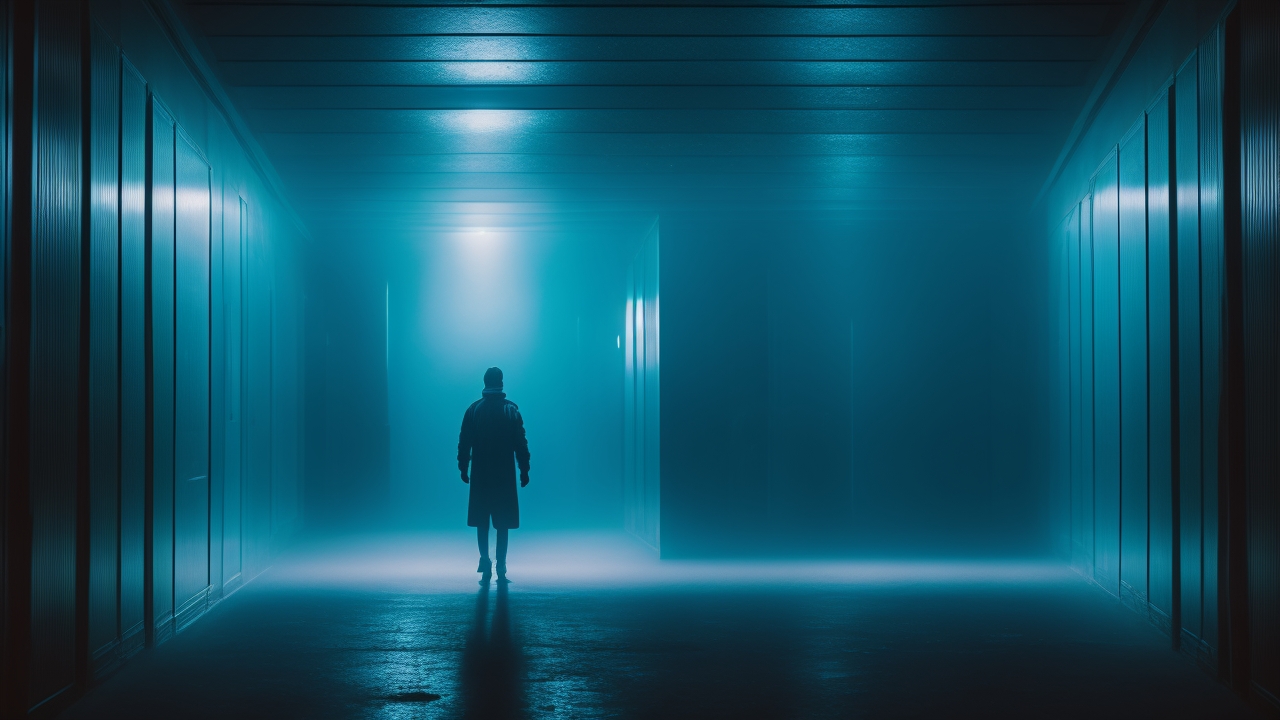
The first time you hear a ghost story told by an algorithm, something in you bristles. Yet here we are: in darkened living rooms and abandoned school corridors, people are holding up their phones, asking the unseen to speak through code. The most current frontier in the supernatural isn’t a crumbling castle or a dusty séance room – it’s the glowing screen in your hand.
Across the paranormal world, a quiet revolution is underway. Investigators are blending traditional intuition with data, apps, and artificial intelligence, transforming how we chase the mystery of what lies beyond.
From Flashlights to Phone Screens: A Field in Transition
For decades, ghost hunters relied on the same core toolkit: EMF meters, voice recorders, temperature guns, a good flashlight, and a willingness to sit in the dark for hours. That toolkit is still in use, but it now shares space with spirit communication apps, algorithm-driven audio filters, and AI software designed to sift through hours of recordings for anomalies.
In a reflective piece on shifts in the field, the Australian site LLIFS (Living Life in Full Spectrum) notes that over the last two years the paranormal community has moved sharply toward using apps and incorporating AI into investigations, fueling both excitement and debate about what counts as ‘real’ evidence and what is just digital noise.[3]
At the same time, interest in the supernatural is not fading into the background. According to Gallup’s 2025 polling, about one in three Americans can be described as generally open to paranormal concepts, believing in at least three and an average of five different supernatural phenomena.[6] Another May 2025 Gallup finding, reported by Straight Arrow News, highlights that roughly four in ten Americans say they believe in ghosts, with belief trending upward among younger generations.[7] In other words, as the tools get more high-tech, the audience grows more receptive.
Put simply: we are living through a moment when the line between spiritual curiosity and digital experimentation is thinner than ever.
The Rise of the Algorithmic Apparition
The hottest trend in paranormal research right now is not a specific haunted location or a new type of spirit photograph – it is the blending of artificial intelligence, smartphone apps, and machine learning with traditional investigation techniques.
Investigators and enthusiasts are using:
- Audio apps that claim to scan vast libraries of phonetic sounds, allowing spirits to assemble words in real time.
- AI-powered noise reduction and pattern recognition tools to flag potential electronic voice phenomena (EVP) in hours of recordings.
- Computer vision algorithms to highlight unusual motion or shapes in video footage that the human eye might miss.
Some long-time researchers see this as the logical next step. If you believe that the supernatural can manipulate electromagnetic energy or electronic devices, then it is not a stretch to imagine that whatever intelligence lies behind hauntings might also be able to nudge bits and bytes. Others, however, warn that algorithms are extraordinarily good at finding patterns that are not really there – the digital equivalent of seeing faces in clouds.
LLIFS captures this tension, acknowledging that AI is now “essentially embedding itself into our world,” while also expressing strong personal reservations about how it might distort or dilute serious paranormal inquiry.[3] The question is not just whether ghosts can speak through an app, but whether our hunger for immediate, screen-based experiences is reshaping what we are willing to call evidence.
Belief, Data, and the New Skepticism
Contrary to what you might expect, the mainstream embrace of paranormal ideas has not erased skepticism; it has sharpened it. The 2025 Gallup research shows that roughly two-thirds of U.S. adults remain generally skeptical, believing in only one paranormal concept on average.[6] That means every investigation is taking place in a cultural landscape where belief and doubt coexist, sometimes in the same household, sometimes in the same person.
Technology complicates this balance. On one hand, there is a hope that more data will mean clearer answers. If you capture thermal imagery, audio, EMF levels, and video simultaneously, and then feed it all into an analytic tool, surely patterns will emerge. On the other hand, more data simply means more room for interpretation – and more room for human bias to slip in.
This is where the language of research begins to blend uncomfortably with the language of faith. A paranormal investigation today might involve informal experiments, control objects, and careful note-taking, but it also involves gut feelings, synchronicities, and a willingness to sit with the unprovable. Technology has not changed that core mystery; it has only given us new ways to circle around it.
Teen Ghost Hunters and Digital Doorways
One of the most significant social changes in this space is who is doing the investigating. LLIFS observes that teens are now more interested in the paranormal than ever, drawn into the community by social platforms and short-form videos that showcase ghost hunts, unexplained clips, and live-streamed investigations.[3] Many groups are responding by creating teen-friendly events, both to share knowledge and to discourage risky behavior like breaking into abandoned sites on their own.
This youth-driven wave of curiosity has consequences. Younger investigators are often more comfortable with apps, AI tools, and rapid-fire experimentation. They might run a dozen different spirit communication apps in a single night, then crowdsource interpretations from followers or friends. What previous generations would have treated as a solemn vigil becomes a kind of interactive, communal experiment.
Yet beneath the aesthetics of smartphones and live chats lies something timeless: the desire to encounter the unknown, to test the boundaries of reality, and to feel part of a community united by questions science has not fully answered. The format is new. The longing is ancient.
Full Moons, Viral Trends, and the Digital Supernatural
It is not just ghost apps that show how the supernatural is evolving in public life. Even celestial events are being filtered through a digital, paranormal lens. When news outlets report on major lunar events, they increasingly note the parallel surge in online speculation about supposed supernatural effects.
Coverage of the December 2025 Cold Moon, for example, describes how searches and posts about full-moon-related supernatural phenomena spiked as the event approached, with people trading stories of heightened intuition, emotional surges, and strange disruptions that they link to lunar phases.[5] The pattern is familiar: a natural event triggers a wave of personal anecdotes, which then feed back into the culture as a kind of crowd-sourced folklore.
This is one of the defining features of contemporary paranormal culture. Instead of mysterious stories trickling slowly through local legends, they accelerate online, shaped by reposts, stitched videos, and comment threads full of quick-fire interpretations. The mystery has not vanished; it has simply migrated into new spaces, where it is constantly updated, debated, and remixed.
How to Explore This New Paranormal Frontier Thoughtfully
If you feel drawn to this intersection of technology and the supernatural, you are not alone. Yet the most grounded investigators will tell you that tools are only as good as the intentions behind them. Here are a few practical ways to step into this emerging landscape with clarity and respect:
- Start with intention, not just an app. Before you open any paranormal tool on your phone, ask yourself: Why am I doing this? Are you seeking comfort, curiosity, thrills, or genuine research? A clear intention helps you stay grounded, reduces fear, and makes you less likely to jump to wild conclusions.
- Document everything, question everything. If you capture an unusual sound, image, or reading, write down the time, place, conditions, and what else was happening around you. Then work just as hard to debunk it as you did to capture it. Did a notification sound like a whisper? Did car headlights cause that shadow? Treat each anomaly as a puzzle, not a guaranteed ghost.
- Use AI and apps as assistants, not oracles. Let technology help you organize, filter, and review your data, but remember that it can also amplify pareidolia – the tendency to see patterns where none exist. An AI that finds a face in static is not proof of a spirit; it is proof that the algorithm is doing what it was built to do. Keep human discernment at the center.
- Respect the living and the dead. Whether or not you believe you are speaking to spirits, you are always interacting with places and histories that matter to someone. Avoid trespassing, damaging property, or sensationalizing personal tragedies. A truly ethical paranormal community treats every location and every story with care.
- Balance screen time with sensory time. It can be tempting to watch your device during an investigation, waiting for an alert or a spike. But some of the most profound experiences come when you put the phone down, listen to the silence, feel the atmosphere of a room, and open yourself to subtler impressions.
Is Technology Bringing Us Closer to the Other Side – or Just to Ourselves?
At the heart of this trend lies a more intimate question: Are our increasingly sophisticated tools bringing us closer to genuine contact with the supernatural, or are they simply giving us new ways to hear our own hopes and fears echo back?
One possibility is that both things are happening at once. The same app that misinterprets random noise as a whispered name might, on another night, capture something that defies easy explanation. The same AI that over-detects patterns could also, occasionally, highlight a moment that investigators would otherwise have overlooked. The dance between signal and noise is as old as paranormal research itself; only the instruments have changed.
Yet what feels most significant about this moment is not the technology alone, but the way it is knitting people together. Forums, local meetups, online circles, and cross-border collaborations are giving rise to a truly global paranormal community. Teen investigators, seasoned researchers, cautious skeptics, and quietly spiritual seekers are all contributing to a living archive of experiences and experiments, each adding their own piece to the mystery.
If anything, the trend of AI-assisted ghost hunting reminds us that even in a world of code and circuitry, humans are still searching for meaning. We are still listening for a voice in the static, still peering into the darkness, still wondering if consciousness really ends at death or if there is some vast, interconnected reality we only glimpse in rare, fragile moments.
Perhaps that is the real phenomenon of the week: not a single haunted house or startling EVP, but the way our tools, questions, and stories are converging into a shared exploration. Whether you are a believer, a skeptic, or floating somewhere in between, you are invited into this evolving conversation.
So consider this your gentle call: if you have a story, a strange moment, or a quiet brush with the unexplained, bring it to the community that is forming around this work. Share it with care, listen to others with respect, and stay curious. In the end, the most powerful instrument in any paranormal investigation is not the app or the algorithm, but the human willingness to meet the unknown with both discernment and wonder.