You know that odd shiver that runs through you just before your phone lights up with a message from the exact person you were thinking about? Or the way an entire room seems to hold its breath before big news breaks? More and more people are starting to wonder: what if these moments are not random, but signs of a larger, shared psychic phenomenon?
This week, we are zooming in on what may be the most current trend in psychic experience: the rise of collective intuition – the sense that our minds are quietly, constantly, connected.
The New Psychic Wave: From Private Hunches to Shared Signals
For decades, psychic talk revolved around individual gifts: the lone clairvoyant, the gifted telepath, the one friend with uncannily accurate dreams. Now, something different is unfolding. Our conversations about intuition are shifting from the solitary to the shared, from the special few to the everyday many.
Part of this is cultural. In recent years, large-scale studies have shown that belief in psychic and related spiritual ideas is not a fringe curiosity – it is mainstream. A report summarized by TarotCards.io, drawing on Pew Research Center data, notes that roughly 4 in 10 Americans report at least one psychic or paranormal experience, and around 40% of women specifically say they have had a psychic experience in their lives. At the same time, 69% of women and 55% of men embrace at least one so-called new age belief, including psychics and related phenomena, suggesting that quiet intuitive moments are being taken more seriously than ever.
What has changed most in 2025 is not only that people believe, but that they are comparing notes – on social media, in group meditations, in online circles tracking shared dreams or hunches about global events. Intuition has gone collaborative.
Why Now? The Convergence of Stress, Data, and Digital Community
Collective intuition is flourishing at the intersection of three forces: global uncertainty, accessible research, and an always-online community.
First, there is the emotional climate. Psychics and intuitives have been predicting a turbulent mid-decade for years, pointing to intensified weather events, social upheaval, and widespread anxiety. Whether or not one accepts their forecasts, it is hard to deny that uncertainty sharpens our inner listening. When the external map is shifting, we check our internal compass more often.
Second, there is the way data is reshaping the conversation. According to an industry analysis summarized by MysticMag in 2025, the psychic services market in the United States has grown by over 50% in size since 2005 and was already projected to reach about $2.2 billion in annual revenue by 2021, with continued growth beyond that. Those numbers may sound dry, but they tell an intimate story: millions of people are paying money not just for predictions, but for confirmation that their own intuitive flashes matter.
Finally, there is the digital web. Group meditation apps track synchronized heart rates. Social platforms allow thousands to log dreams on the same night. Online circles share stories of precognitive nudges about world events, market swings, or personal turning points – and then watch, in real time, to see what unfolds.
The result is a subtle but profound shift: instead of asking, ‘Am I psychic?’ people are starting to ask, ‘What happens when we are psychic together?’
Is There Any Science Behind Collective Intuition?
The word research can feel like the opposite of mystical, but the gap between them is not as wide as it once was. While mainstream science remains cautious – and often skeptical – there have been intriguing efforts to study group-level phenomena that look a lot like shared intuition.
For years, researchers in parapsychology laboratories have run experiments on telepathy, remote viewing, and presentiment (the idea that the body can subtly respond to future events). The findings are debated, but certain patterns have proved hard to ignore: small, statistically unusual deviations that show up when people direct their attention together.
At the same time, studies in neuroscience and psychology have begun documenting how brains ‘sync up’ during shared experiences. Functional imaging has shown that when people cooperate, tell stories to each other, or even listen to the same narrative, their neural activity can become surprisingly coordinated. This does not prove telepathy, but it does suggest that our minds may be more relational – and less isolated – than the old models assumed.
On the public side, surveys from organizations like Gallup continue to show that a substantial portion of people report belief in at least one paranormal or psychic phenomenon, even as they maintain a practical, everyday life. Psychic healing and experiences with spirits often top the list of reported phenomena, even when other ideas such as astrology or reincarnation generate more skepticism. In other words, the lived experiences people talk about most are those that involve a felt sense of connection: not only to something beyond, but to one another.
Is this proof? No. But it is a growing body of hints, data points, and testimonies that suggest our intuition does not operate in a vacuum. It moves in fields, clusters, and waves.
How Collective Intuition Shows Up in Ordinary Life
Collective intuition does not always arrive as a dramatic, world-shaking vision. More often, it hums in the background of daily life.
You see it when a family scattered across different cities all think of calling an elder on the same afternoon, only to find that person needed support. You sense it when a workplace team simultaneously grows uneasy about a direction that looked good on paper, long before the numbers confirm it. You witness it when protests, creative movements, or new social innovations appear in multiple corners of the world at once, as if pulled forward by an invisible common thread.
This is not to say every coincidence is cosmic. Skepticism is a healthy companion to wonder. But when patterns keep reappearing – across households, classrooms, online groups, and spiritual circles – it becomes harder to dismiss them as random noise.
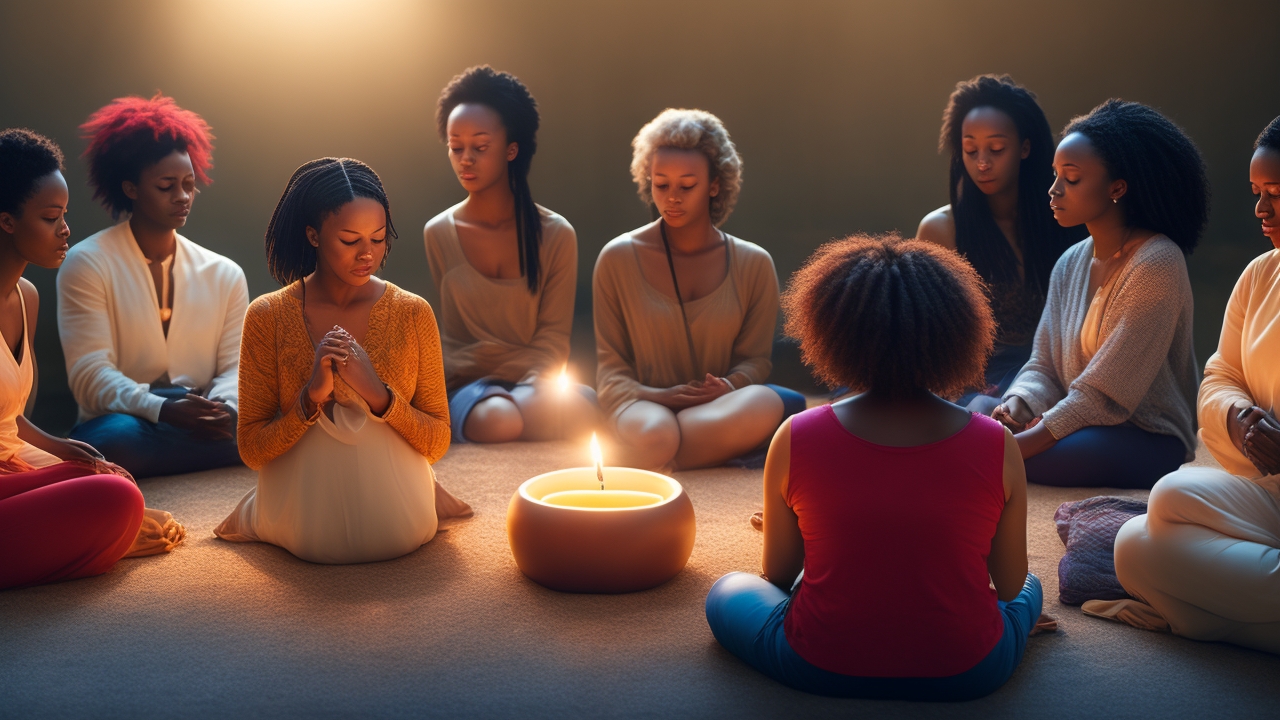
In many intuitive and psychic communities, there is a growing practice of ‘listening together’: regular check-ins where members quietly sense into a question, then share what arose. What surprises them most is not the occasional accurate prediction, but the way images, feelings, and phrases overlap. People who have never met report similar symbols for the week ahead. Emotions echo. Themes converge.
That resonance, many say, feels less like one talented psychic shining in the dark and more like an entire field of awareness turning up the lights.
Practical Ways to Tune Into the Trend
If collective intuition is the psychic phenomenon of the moment, the obvious next question is: what can you actually do with that? The good news is that you do not need a special lineage or an expensive course to begin experimenting. What you need most is attention, honesty, and a willingness to compare your inner data with others – gently, without ego.
- Start a simple ‘intuition log’ – and share patterns. Keep a small notebook or digital journal where you jot down strong hunches, vivid dreams, or sudden mood shifts that feel out of place. Once a week, compare notes with a trusted friend or group. Notice repeated themes, shared symbols, or similar timings. You are not trying to score points for accurate predictions; you are learning how your inner signals overlap.
- Create short, shared ‘listening windows’. Choose a specific time – say, ten minutes on a Sunday evening – when you and a few others quietly focus on the same question, such as ‘What energy is moving through our city this week?’ or ‘What do we need to pay extra attention to at work?’ Afterwards, calmly share what came up. Look for echoes rather than identical messages. Over time, you may begin to trust that there is a larger field of information you can sense together.
- Pair intuition with grounded action. When a collective nudge arises – for example, several people in your circle feel drawn to check in on neighbors, save more money, or prioritize rest – treat it as a hypothesis and test it gently in real life. Make a phone call, set aside a little extra in savings, reorganize your schedule. Intuition becomes more reliable when we give it practical channels, and a community can help confirm which signals are wise and which are just passing weather.
- Balance wonder with discernment. Being part of a psychic or spiritual community does not mean believing every dramatic claim. In fact, the more people share their impressions, the easier it becomes to spot what is fear-driven and what feels genuinely steady. Ask: Does this shared hunch inspire compassion and clarity, or panic and division? Collective intuition, at its best, widens our circle of care.
- Honor quiet minds as much as loud visions. Some people in your group may see vivid images or receive detailed messages. Others may simply feel a soft yes or no in their body. Encourage every style of knowing. The emerging research on intuition suggests that subtle cues – a shift in heart rate, a small twinge in the gut, a sudden sense of ease – can be as informative as bold visions, especially when many people report something similar.
Redefining What It Means to Be ‘Psychic’
One of the most healing aspects of this trend is how it softens the old hierarchy around psychic gifts. Instead of elevating a few special figures as the sole keepers of insight, collective intuition invites everyone into the conversation.
In that sense, the booming interest in psychic services and spiritual tools is less a sign of dependence and more a sign of curiosity. People are not just asking, ‘Tell me my future.’ They are asking, ‘Help me understand what I am already sensing. Help me validate the quiet knowings I have been ignoring.’
As this continues, being psychic may come to mean something broader and more humane: not just foreseeing events, but feeling into the emotional and energetic currents that run through families, workplaces, and societies – and then choosing kinder, wiser paths together.
We may discover that the most powerful psychic phenomenon is not a single, dazzling prediction, but a thousand small intuitions aligning around care.
Where We Go From Here
Collective intuition is still a young language. Research is only beginning to map it. Surveys are only beginning to ask the right questions. Communities are still experimenting with how to honor inner knowing without losing critical thinking.
Yet there is something unmistakably alive in this moment. Across continents and cultures, more people are quietly admitting: ‘I felt that coming,’ or ‘I knew you were going to say that,’ or ‘I had the same dream.’ Instead of brushing those moments aside, they are comparing, tracking, and learning. They are letting their inner compasses speak to each other.
If you feel a tug reading this – a sense that your own intuition has been whispering in the background for years – consider this your invitation. You do not have to become a professional psychic, or announce anything dramatic about your gifts. You can simply begin where you are: with a notebook, a few trusted companions, and a willingness to treat your inner life as real data.
Over time, you may find that your private hunches are not so private after all. They are part of a wider, living field of awareness that includes you, but is not limited to you. And in a world that can feel fragmented and noisy, that realization can be quietly revolutionary.
So lean in. Share your stories. Listen to others. Let your intuition meet theirs and see what new patterns emerge. Somewhere in the overlap – in that shared space where insight, research, and lived experience meet – a new kind of psychic community is being born, one gentle conversation at a time.