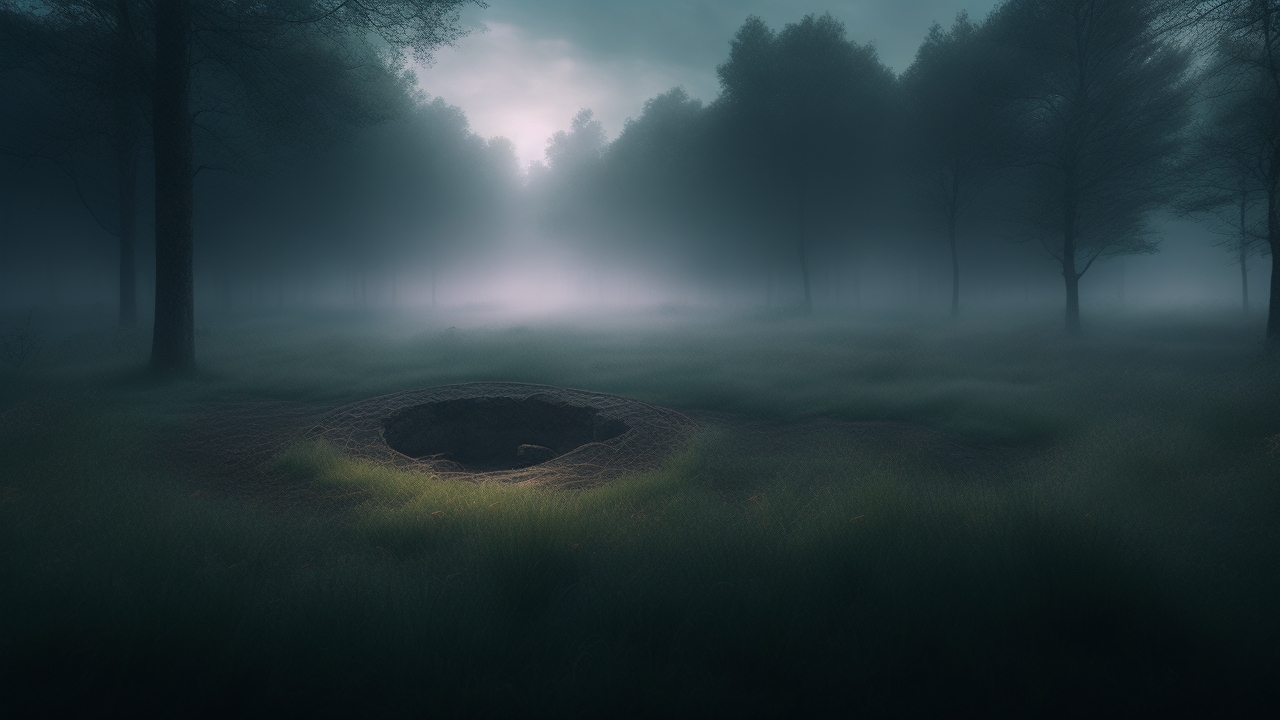
It starts with a patch of land where nothing grows—a perfect circle of blighted grass, hidden on the edge of a national park. Local rangers whisper about ‘dead zones,’ places where animals won’t tread and nights hang just a little too quiet. In 2025, as evidence mounts and strange footage sweeps social media, one thing is clear: North America’s latest cryptid saga has the world holding its breath.
Latest Sightings
According to a deeply detailed rundown by the cryptid research channel Every Cryptid Story from 2025 So Far, the past several months have brought an unusual uptick in field reports submitted by wildlife officials and hikers. Most notably, in March, a ranger checking on remote campers in the Rockies stumbled onto massive, inexplicable tracks—at first meandering, then leaping as if the unseen creature could span 20 feet in a single stride. The real shock came when several game cameras aimed at the site produced only ten seconds of pure static at precisely 3:33 a.m. Careful reviewers, zooming into the frames, claimed to see ‘hundreds of eyes’ flickering in the noise. The occurrence was so unsettling that a family who’d camped nearby abandoned their site by morning and refused to speak about the previous night.
This isn’t an isolated event. According to the Pew Research Center’s June 2025 survey, belief in ‘unknowable creatures’—from Bigfoot to shadowy forest beings—has risen to 28% of U.S. adults, the highest since the organization began polling on cryptid attitudes twenty years ago. Additionally, National Geographic news data from July 2025 highlights a doubling of cryptid-related social media posts year-over-year, indicating that not only are more people reporting sightings, but the phenomenon has become deeply embedded in the daily news cycle.
Folklore and History
For centuries, North America’s forests and swamps have been fertile ground for legends. Indigenous traditions across the continent speak of spirits or creatures dwelling at the fringes of human settlement, beings that maintain balance in nature or mete out lessons to the unwary. As European settlers pushed deeper into wild country, their own stories of woodwoses and wildmen mingled with native narratives, giving rise to cryptids that are neither wholly animal nor spirit—for example, the infamous Sasquatch and the lesser-known ‘yahi’ of Australian lore, which many researchers see as parallel myths adapted to each region.
Recent public fascination has only rekindled old legends. Rangers, like the one who recently discussed his findings on Every Cryptid Story from 2025 So Far, are quick to point out that today’s reports have eerie echoes in oral histories: crops that will not grow on certain land, herds that spook for no reason, and ‘eyes in the mist’ recounted for generations. Science cannot yet explain these phenomena, but folklore provides its own mosaic of answers—a reminder of how mystery can bind a community and feed local identity.
Why It Matters Today
This 2025 wave of cryptid news is more than just thriller fuel for late-night campfires. Scientists, folklorists, and psychologists are paying close attention as hundreds—if not thousands—of people report parallel details: sudden patches of lifeless flora, static-filled photos with blurry forms, animals behaving in ways that challenge explanation. Cultural experts now contend that belief in cryptids isn’t a fringe pursuit. The Pew Research Center poll found that among Gen Z respondents, nearly one in three say cryptid mysteries make them feel more connected to their community and local ecology.
Meanwhile, skeptical researchers are calling for more coordinated studies, arguing that the rise in sightings may reveal crucial gaps in wildlife monitoring or environmental change detection. Even critics admit, however, that the present moment is rewriting the playbook on how society copes with the unknown. Open forums, field expeditions, and grassroots research efforts are flourishing as more people seek understanding—if not answers—together.
Community Voices and Field Reports
In the words of one ranger, ‘Whatever’s out there, it’s teaching us something. Even if it’s just to pay closer attention.’ The ‘dead zone’ phenomenon—in which circles of stunted growth seem to spread outward each month—has now been confirmed in five U.S. states and two Canadian provinces, according to a July 2025 article by National Geographic. A growing number describe waking to unsettling silence or seeing odd flashes on night vision feeds. Ordinary people are capturing strange, synchronized eye-gleams in static, their images fueling an online wave of citizen research. As cryptid news and updates surge across TikTok and Reddit, this mystery has become a lightning rod for both believers and skeptics.
A compelling aspect lies in the communal response: field meetups, digital map tracking, and shared databases for logging incidents. For cryptozoologists, the vast, crowdsourced data set is becoming one of the most intriguing in decades. One leading field researcher commented, ‘We still don’t know if these dead zones are caused by an undiscovered species, a mutation, or a chain of rare coincidences. But we do know that without community engagement, we’d never have noticed the pattern.’
Practical Takeaways
- Stay curious and observant—keep a detailed log of any unusual wilderness findings, no matter how minor they seem. The biggest breakthroughs in cryptid research often start with a single, well-recorded observation.
- If exploring areas where recent cryptid activity is reported, bring backup and standard safety gear, and always inform someone of your route. The unknown—be it wildlife or otherwise—demands respectful caution.
- Participate in local cryptid community events or online forums to help track, verify, or debunk news and sightings. Your contribution might add a crucial piece to the wider puzzle.
Sometimes a mystery isn’t just about what’s hidden in the woods, but what it draws out in us—a readiness to watch, to wonder, to connect. As 2025’s cryptid saga evolves, it reminds us that the unknown isn’t just a shadow to be feared, but a space for community, research, and the ever-renewing magic of folklore. If you’ve got a story, question, or insight, now’s the time to add your voice to the conversation—because every mystery is a little less mysterious when we face it together.