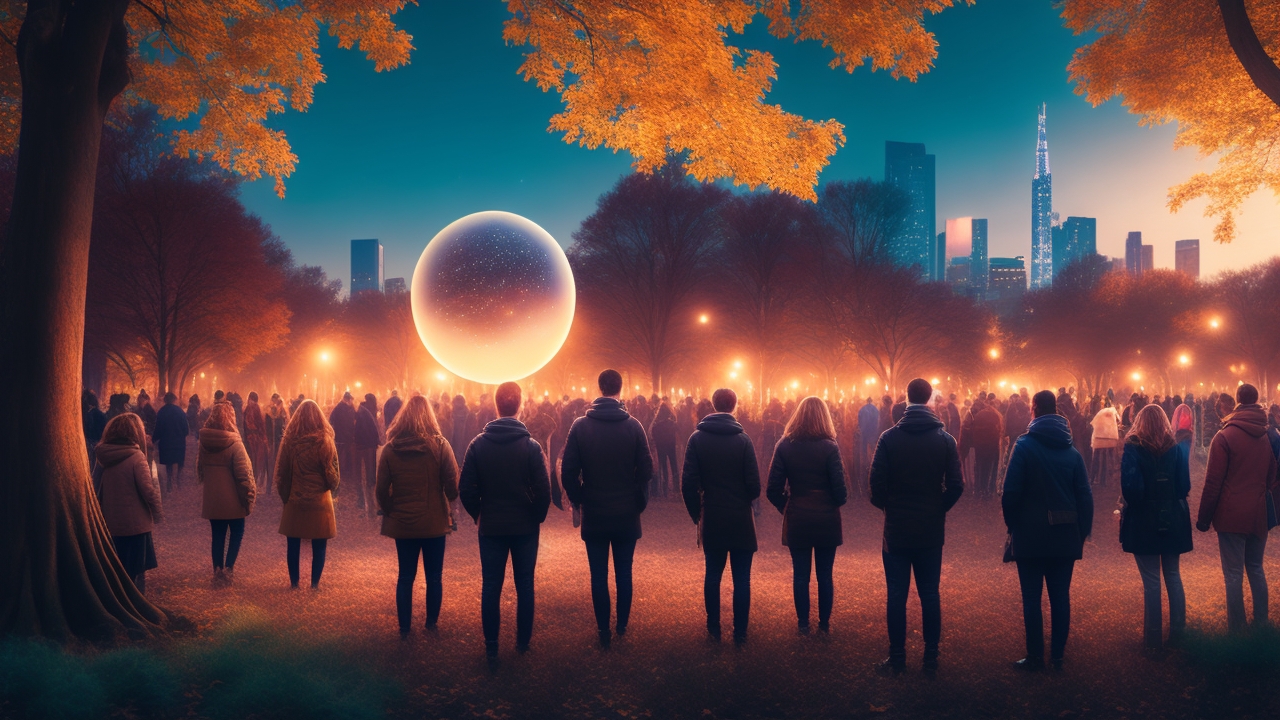
On a humid evening in early September, as the horizon glowed with city lights and the first leaves hinted at autumn, cell phones erupted in a New York park — everyone trying to catch a fleeting pair of glowing orbs that danced low in the sky before vanishing. Their brief choreography left onlookers breathless, exchanging stories that would ripple through online forums by sunrise. Welcome to 2025, the year UFOs became not just a curiosity, but a national obsession revived, redefined, and finally discussed in daylight.
Encounters on the Rise: 2025’s UFO Surge
Few trends have captivated the public imagination as thoroughly this year as the extraordinary rise in UFO, or as officials now prefer, Unidentified Aerial Phenomena (UAP) reports. According to the National UFO Reporting Center (NUFORC), there were over 2,000 sightings logged in just the first half of 2025 — a dramatic uptick that eclipses previous years and aligns with renewed calls from both Congress and the scientific community for transparency and open research. In New York State alone, curious citizens watched the skies and recorded 66 separate UAP sightings between January and June, with patterns emerging from sleepy rural towns to bustling city avenues, as noted in NUFORC’s latest report.
What’s driving this surge? Several forces have converged: congressional hearings held in starkly lit chambers have brought forward military pilots and veterans with compelling, at times chilling, sworn testimony about encounters with technology beyond current explanation. Meanwhile, new Pentagon guidelines urge aviators to report sightings without fear of ridicule, reducing the stigma and fueling open discussion across both military and civilian spheres. As a result, what once would have been dismissed as late-night campfire stories are now being logged, analyzed, and debated with rare seriousness.
Shadows, Spheres, and Surreal Shapes: The New Faces of UFOs
If you picture a UFO as a disc hovering above a cornfield, it might be time for an update. This year’s most credible reports paint a stranger, richer tapestry. Among the top 10 most credible UFO sightings of 2025 compiled by Goldsea, a new trend is emerging: jellyfish-shaped craft trailing translucent, glowing appendages; metallic humanoids levitating silently in the clouds; and, most commonly, sleek orbs and spheres capable of breathtaking maneuvers — sharp turns, dazzling accelerations, and silent flight, often confirmed by multiple eyewitnesses and sometimes by radar or video footage.
Take, for example, the extraordinary events over Yemen where U.S. military personnel captured video of a missile striking a spherical UAP — which, undeterred, continued on its path, an encounter later shown in official congressional hearings. Or in Utah, where high-resolution footage went viral after a metallic humanoid form hovered amongst the clouds, sparking broad debate within the UFO research community about possible explanations. NUFORC’s records from New York echo these patterns, with suburban skies and rural hamlets alike witnessing white orbs executing maneuvers that no known aircraft should be able to match. One vivid report came from Chester, where a pair of brilliantly lit orbs made an abrupt, synchronized ninety-degree turn before blinking out — behavior the witness called both beautiful and unnerving.
Open Files, Open Minds: Governments and Grassroots Step Forward
One of the most profound changes this year is not just in what people are seeing, but who is talking about it, and how. The U.S. Congress has taken strides in holding public hearings, inviting both skeptics and true believers to debate evidence and demand accountability from defense and intelligence agencies. Whistleblowers—once rare—now share their stories on the record, sometimes revealing persistent sightings at military installations or offering video evidence previously kept classified. The Pentagon’s own All-domain Anomaly Resolution Office (AARO) has admitted that a portion of cases remain unexplained, drawing cautious but vocal interest from scientists, engineers, and data analysts eager to apply cutting-edge tools to the puzzle.
The impact is already visible beyond government corridors. Community groups, amateur astronomers, and researchers across the world are pooling resources, analyzing footage, and building databases to sift signal from noise. The stigma that haunted decades of UFO research is rapidly fading, replaced with a culture of rigorous documentation — complete with timestamps, geographic coordinates, and multi-witness collaboration. Even social media, often accused of spreading misinformation, is proving a boon to real-time reporting, making it possible for hundreds to witness and cross-verify the same event inside minutes.
Survey Spotlight: What America Believes About Aliens Now
As eyes turn skyward, attitudes are shifting on the ground. A 2025 Pew Research survey found that 52% of Americans now believe intelligent extraterrestrial life exists, and nearly a third think that some UFOs could represent such visitors. This reflects a dramatic jump compared to even five years ago, as public conversation pivots from ridicule and conspiracy to curiosity and open-minded skepticism. Meanwhile, a separate Gallup poll noted that almost 40% of adults aged 18-34 say they would participate in a scientific study of UFOs or volunteer for citizen-led sky watches — a stark sign that the once-niche UFO community is swelling with new and younger voices. These findings have inspired academic institutions to revisit the subject, with a handful of universities now offering symposia and courses dedicated to the interdisciplinary study of unexplained aerial phenomena.
How to Join the Search: Tips for Aspiring UFO Spotters and Community Researchers
Whether driven by curiosity, skepticism, or the persistent itch to answer age-old questions about aliens and extraterrestrial visitors, more people than ever are setting out to observe, document, and analyze what’s happening overhead. Here are some practical tips to join the new wave of skywatchers and citizen researchers:
- Document with Precision: Always record the time, location, weather conditions, and any notable astronomical phenomena (like meteors) when witnessing a potential UFO event. Use your phone’s video and note features to collect as much detail as possible in the moment.
- Collaborate, Don’t Isolate: Connect with others in your area through online forums and local skywatching groups. Cross-check sightings and compare notes — the more witnesses, the more credible and valuable each report becomes.
- Practice Discrimination: Learn about common celestial and human-made objects (drones, satellites, aircraft) and brush up on astronomical events. Many sightings are quickly debunked with the right background knowledge, making the truly anomalous cases stand out for further study.
Reflecting on the Moment: The Sky Is Open Again
Whether 2025 will be remembered as the year humanity met its extraterrestrial neighbors or simply the year we finally looked up and asked new questions, one thing is clear: the conversation around UFOs, aliens, government disclosure, and public research has transformed. No longer relegated to the fringes, these mysteries have become a wide-open field for honest inquiry and shared wonder. If you find yourself peering at the twilight sky, remember — it is not just what we see, but how we choose to engage, question, and collaborate that will shape this next chapter. To anyone curious, skeptical, or simply inspired by the unknown: the community welcomes you. The search is just beginning.