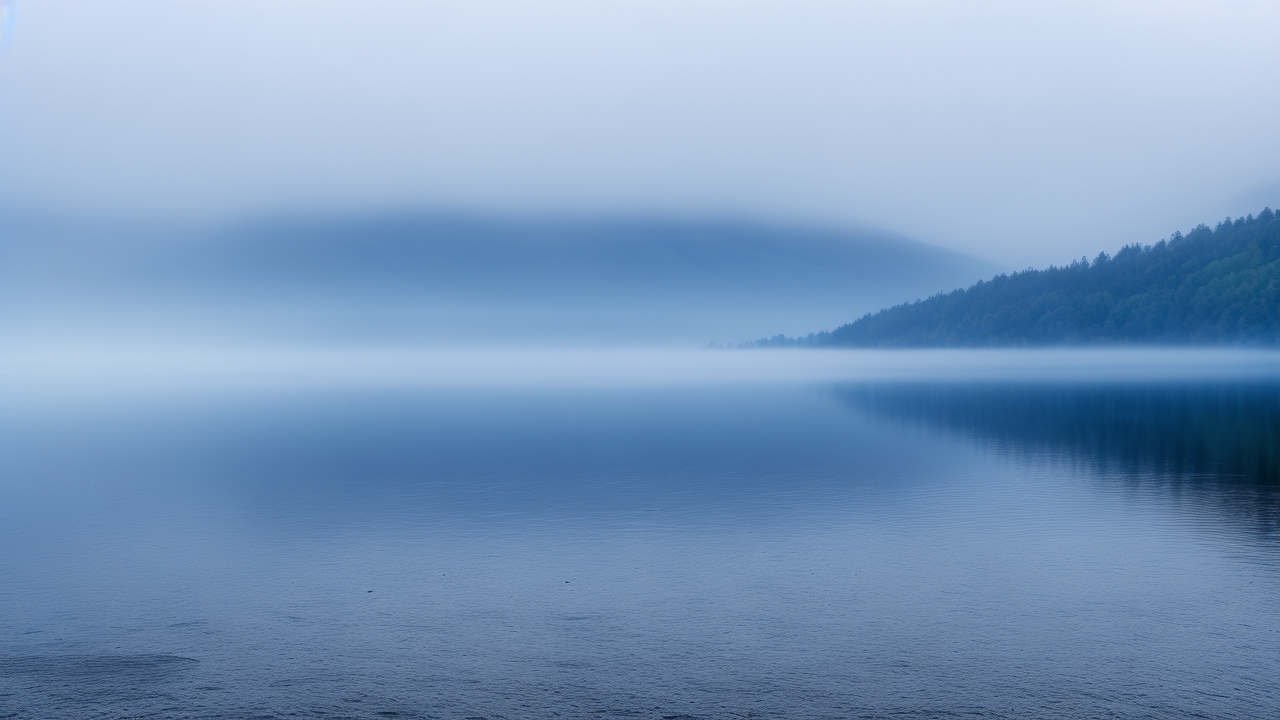
In the still gray of a Scottish morning, the surface of Loch Ness looks like a sheet of gunmetal glass. Then, without warning, something long and dark breaks the water, vanishes, then rises again farther out. For almost a century, people have been saying that whatever lives in this deep, cold loch is not supposed to exist — and in 2025, the mystery of the Loch Ness Monster is surging back into the spotlight.
This week, our cryptid of the week is an old legend having a very modern moment: the Loch Ness Monster, better known as Nessie.
Origins and Folklore
The idea of something uncanny in Loch Ness is older than the famous blurry photographs and grainy home movies. Long before the term cryptid was coined, the Highlands were thick with folklore about the water-kelpies and lake monsters said to haunt dark, deep lochs. These stories weren't just campfire tales; they were warnings wrapped in story form, cautioning children to keep away from dangerous shores and treacherous currents.
Written mentions of a strange creature near the River Ness go back as far as medieval chronicles, where a water beast is said to have dragged a man beneath the surface before being driven off by a holy man. Whether or not that particular story happened as written, it helped cement the idea that something powerful and unseen could dwell in the region's waters. Over generations, the beast of the Ness evolved and shifted: sometimes dragon-like, sometimes serpentine, sometimes almost whale-like in description.
It was in the 1930s, though, that Nessie truly became part of global folklore. The construction of a modern road along the loch's shoreline suddenly made this once-remote body of water easily accessible. With more eyes on the water came more tales: a hump crossing the surface here, a long neck there, a wake with no obvious cause. A string of reported sightings turned into a sensation as newspapers ran dramatic headlines and artists sketched enormous, prehistoric-looking reptiles in the mist.
As Nessie entered the public imagination, people began to use the language of science to describe what they thought they were seeing. Suddenly, the word 'plesiosaur' — a marine reptile from the age of dinosaurs — appeared in headlines and conversations. The idea that a relic from a lost epoch might be gliding through a cold Scottish loch made the story irresistible. Over time, the Loch Ness Monster became more than a local legend; it became a symbol of the world's enduring mystery, a reminder that perhaps not everything had been mapped, measured, and cataloged.
Crucially, Nessie folklore has never been static. Fishermen, hotel owners, schoolchildren, and visiting travelers have each added their own twists: descriptions of multiple humps, of creatures moving at surprising speed, of shapes that seemed to dive vertically rather than swim horizontally. Each generation reinterprets the beast in its own image, weaving the story into the broader cultural fabric of Scotland and beyond.
From Binoculars to Sonar: The Long Arc of Research
As reports piled up, a more systematic kind of curiosity took hold. Expeditions arrived with cameras, hydrophones, and later, sonar units. Mid–20th century searches swept sonar beams back and forth across the loch, occasionally returning puzzling blips that neither fully proved nor fully disproved the existence of a large creature. Those ambiguous results only deepened the allure.
In recent years, the investigation has become more sophisticated. Modern teams have used drones, thermal cameras, and environmental DNA sampling to better understand what lives in the loch. Environmental DNA, or eDNA, is a technique that analyzes genetic material shed into the water by fish, invertebrates, and other creatures, offering a detailed snapshot of biodiversity without needing to catch anything directly. The hope has been that if Nessie is a biological animal, she might leave behind a genetic signature of some kind — or that some unexpected pattern in the data might hint at a new, unknown species.
So far, the scientific picture has leaned toward the conventional: lots of fish, some eels, and the usual aquatic cast of characters. Yet none of that has resolved every odd sonar contact or every unidentifiable shape seen gliding just under the surface. As often happens with cryptid research, the harder people look, the more the story sprawls out between hard evidence and human imagination.
Modern Sightings: Nessie in 2025
Despite the age of the legend, Nessie is very much a creature of the present. In fact, 2025 has already delivered its first widely discussed sighting. According to a report highlighted by BroBible, veteran Loch Ness watcher Eoin O'Faodhagain captured webcam footage from a Visit Inverness Loch Ness camera that he believes shows something large repeatedly emerging from and then submerging back into the loch's waters. BroBible describes him as a prolific Nessie hunter who has logged more than two dozen possible sightings via webcams in recent years.
The video, as reported, shows a sizable shape that appears, disappears, and reappears at a distance, stirring the surface in a way that many viewers found difficult to dismiss as a simple wave or wake pattern. The same report notes that, according to the Official Loch Ness Monster Sightings Register, there were only three officially recognized sightings in 2024, plus two from webcams — making this new clip a notable early entry for 2025. That low number of official cases actually highlights how rare it is for a report to pass even basic screening and documentation.
At the same time, local coverage from Loch Ness–focused sites has mentioned another potential 2025 sighting from Dores Beach, on the loch's northern shore. In that case, witnesses reported a dark, unexplained form moving in the water at a distance where known boats and swimmers could be ruled out. While details remain sparse and cautious language dominates the discussion, it has still been enough to reignite online debate and draw visitors back to scenic vantage points around the loch's perimeter.
Nessie's resurgence is not happening in a vacuum. Interest in cryptids overall has been climbing in the digital era, thanks to social media, streaming creators, and a thriving online community of amateur investigators. According to a 2023 YouGov survey of American adults, roughly 30 percent of respondents said they believe that at least some legendary creatures — including Bigfoot, lake monsters, or similar beings — could be based on real animals or phenomena. That kind of baseline openness means that when a new Nessie clip surfaces, a sizable minority of the public is already inclined to take a second look.
Tourism numbers echo that curiosity. VisitScotland has repeatedly highlighted the economic impact of Loch Ness lore, and heritage organizations have estimated over past years that Nessie-themed tourism has contributed tens of millions of pounds to the regional economy. While exact year-by-year numbers fluctuate, local businesses consistently report spikes in inquiries and bookings whenever a particularly striking photograph or video makes the rounds online.
The Internet Age of a Classic Cryptid
One of the most fascinating developments in the life of this cryptid is how the internet has reshaped the way sightings are shared and judged. What once would have been a fleeting experience — a single humped shape glimpsed from a passing bus — now becomes a frame-by-frame debate on message boards, subreddits, and niche forums. A witness can upload a still frame or short clip, and within hours people on three continents are enhancing contrast, modeling wave physics, and arguing over pixel artifacts.
This global scrutiny cuts two ways. On one hand, hoaxes and misidentifications are called out faster than ever. A log, a cormorant, or the wake of a distant boat might be debunked before the story even hits conventional news outlets. On the other hand, when a piece of footage withstands that first wave of criticism, it tends to gain more traction and more mythic weight. The recent webcam sighting, for example, has prompted both genuine excitement and careful skepticism, with people replaying the sequence again and again, asking what could produce such a pattern if not a living creature.
According to National Geographic reporting in 2022 on belief in the paranormal and unexplained phenomena, nearly 40 percent of U.S. adults reported believing in at least one paranormal topic, from ghosts to lake monsters, indicating that an appetite for mystery is very much alive. For Nessie, that means a receptive global audience, ready to fold each new photograph or sonar scan into a decades-long story.
At the same time, more conventional wildlife science continues quietly in the background. Biologists track fish populations, study invasive species, and monitor the ecological health of the loch. Their work, while not focused primarily on cryptids, often intersects with Nessie discussions, as fluctuations in prey species or water clarity can influence what people see — or think they see — on any given day.
Why It Matters Today
It is easy to dismiss the Loch Ness Monster as a quaint tourist hook or a relic of tabloid history. Yet the persistence of this legend reveals something deeper about how humans relate to unknown places. Lochs, deep forests, and oceans are liminal zones in our collective imagination. We imbue them with creatures not only because we fear them, but because we respect them.
The Nessie story keeps the idea of natural mystery alive at a time when satellite imagery and databases can make the world feel exhaustively charted. It encourages people to look more closely at landscapes and ecosystems they might otherwise take for granted. One could argue that a child staring at the surface of Loch Ness in hopes of spotting a long neck is, perhaps without realizing it, also learning to observe waterfowl, wave patterns, weather, and light.
There is also a cultural dimension. Nessie operates as an informal ambassador for the Highlands, a piece of shared folklore that gives visitors a way to engage with local stories, language, and history. Even skeptics participate by trading theories and swapping stories of 'almost' sightings. In that sense, the cryptid becomes a social technology: a topic that brings strangers together on the shoreline, in small-town pubs, and in late-night online threads to argue, laugh, and wonder.
From a scientific perspective, the Loch Ness Monster is also a case study in how we design and interpret research around extraordinary claims. It highlights the importance of clear standards of evidence, the role of bias and expectation in eyewitness accounts, and the ways media can amplify both good data and dubious rumors. If nothing else, Nessie has helped multiple generations learn what skeptic-minded investigation looks like — and how to balance open-minded curiosity with critical thinking.
How to Engage with the Legend Responsibly
If Nessie's renewed prominence has you daydreaming about misty shores and mysterious ripples, you are far from alone. But there are thoughtful ways to participate in the story without losing sight of real-world concerns. Here are a few practical takeaways for anyone drawn to this enduring cryptid:
- Practice careful observation. If you visit Loch Ness or follow live webcams, treat your watching like a small science project. Note the time, weather, wind direction, and any nearby boats or wildlife. The closer you pay attention to ordinary patterns, the better you will be at spotting something truly unusual — or recognizing when a 'monster' is actually just a wave.
- Respect the environment. The loch and its shores are home to real, documented species that depend on a healthy ecosystem. Stay on marked paths, avoid littering, and follow local guidelines for boating and wildlife viewing. A responsible cryptid enthusiast leaves the site just as wild and beautiful as they found it.
- Share stories with context. If you post a photo, video, or anecdote online, include as much detail as possible and be honest about uncertainty. Rather than declaring that a shape 'must' be Nessie, consider framing it as a question for the wider community. This approach invites collaboration, reduces misinformation, and makes the process of investigation more inclusive.
- Support local knowledge. Guides, historians, and long-time residents around Loch Ness have seen cycles of excitement rise and fall. Listening to their perspectives — from enthusiastic believers to firm skeptics — can enrich your understanding of how the legend has evolved and what it means to the people who live with it every day.
The Living Waters of a Shared Mystery
Whether the Loch Ness Monster is an undiscovered animal, a long chain of misread natural phenomena, or a living piece of collaborative storytelling, it remains one of the world's most enduring mysteries. In 2025, that mystery is no longer confined to faded newspaper clippings and secondhand anecdotes; it plays out in real time through webcams, social feeds, and heated comment sections.
Yet beneath all the digital noise, the core experience is still beautifully simple: a quiet shoreline, a stretch of dark water, and the possibility that something unknown might surface at any moment. That possibility is what keeps people returning, cameras in hand and stories at the ready.
If you have ever squinted at a suspicious ripple on a lake, if you've paused a video to catch a barely visible shape between waves, or if you've sat up late swapping stories of cryptids with friends, you are already part of the Nessie story. The legend survives not because of any single photograph, but because a global community keeps asking what might still be hiding just out of sight.
So consider this an open invitation: share your own encounters, your family tales, your skeptical analyses, or your favorite bits of local lore. Whether you stand firmly in the 'real animal' camp, the 'symbolic myth' camp, or somewhere in between, your voice helps shape the ongoing folklore of this famous cryptid. The waters of Loch Ness are still dark, still deep, and still full of questions — and the story of Nessie is waiting for the next chapter that you, and we, might help write together.