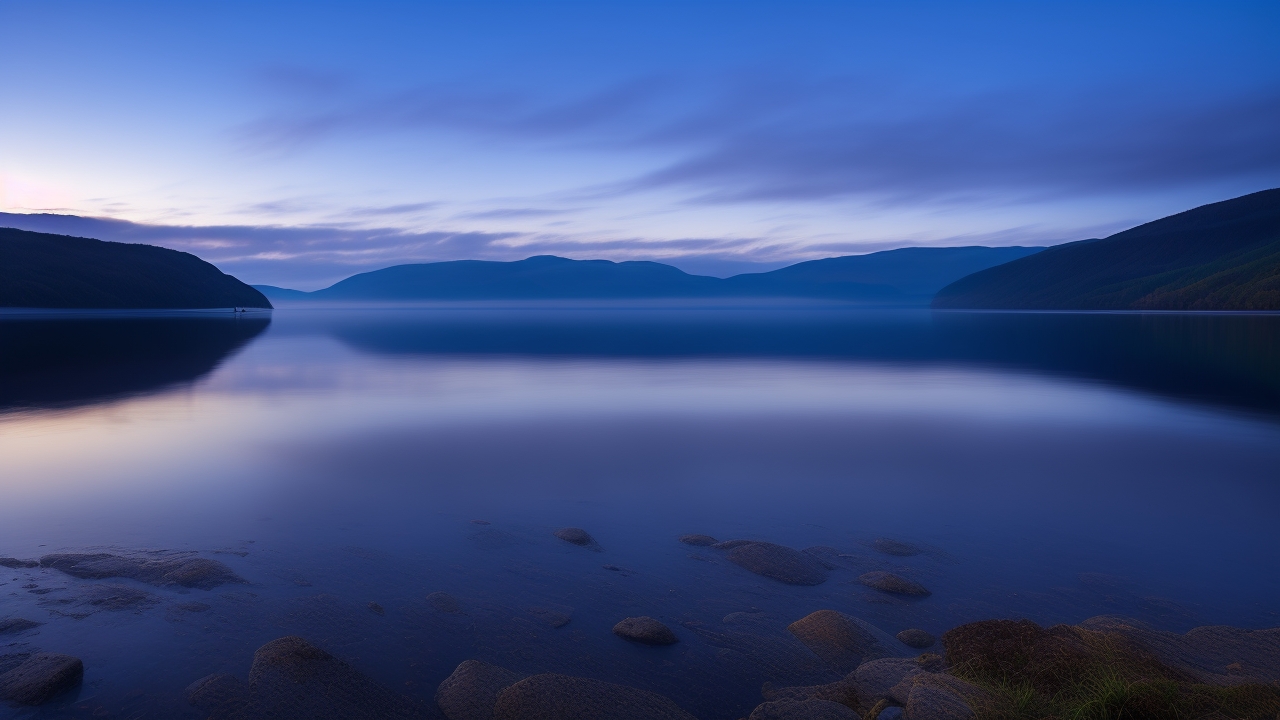
Out in the long, narrow reach of Loch Ness, the water can look as flat and expressionless as a sheet of slate. Then, without warning, something stirs: a dark shape rises, breaks the surface, and slips silently back into the depths before your brain has even finished asking what it just saw. For generations, that fleeting moment of doubt has had a name — the Loch Ness Monster, or ‘Nessie’ — and in 2025, this old cryptid is having a very modern resurgence.
What is striking now is not just that people are still seeing Nessie, but that they are catching her on webcams, sonar, and livestreams, and then arguing about it in real time with a global community that refuses to let this particular mystery sink.
Origins and Folklore
The idea of something strange lurking in the deep, cold lakes of Scotland long predates tourist buses and smartphone cameras. Loch Ness itself is a long, glacially carved trench, over 200 meters deep in places, with dark, peat-stained water that makes visibility notoriously poor. That kind of landscape almost begs for a monster.
Scottish folklore is rich with tales of water spirits and dangerous beings that haunt lochs and rivers. Long before the modern Nessie craze, stories circulated of kelpies — shape-shifting water horses that lured people to a watery grave — and of serpentine creatures surfacing in remote highland waters. Nessie, in many ways, is a twentieth-century heir to those older fears and fascinations, recast as a single, now-famous cryptid with a global profile.
The modern legend follows a familiar arc. In the early 1930s, shortly after a new road was built along the loch, more travelers gained regular views of the water. Reports began trickling in of a large, unidentified creature surfacing and diving again. The most famous early images — grainy photographs of humps and wakes — helped fix the idea of Nessie as a long-necked, plesiosaur-like animal, a prehistoric survivor somehow thriving in a cold Scottish lake.
As the decades passed, Nessie blended into the wider folklore of Scotland. Souvenir shops sold plush monsters, local pubs told stories of sightings stretching back to grandparents and great-grandparents, and the loch itself became less a simple body of water and more a stage for an ongoing narrative. Every ripple and unexplained movement took on potential meaning. In a region where oral storytelling has always been central to culture, Nessie slotted seamlessly into the living tradition of tales told on foggy nights and beside fireplaces.
At the same time, Nessie’s legend tapped into a broader human longing: the hope that somewhere, out of sight, the world still holds hidden wonders that science has not fully mapped. That tension between folklore and research — between story and data — is exactly what keeps this cryptid so compelling.
From Tourist Tales to Sonar Pings
For much of the twentieth century, the Loch Ness Monster lived in blurry photos, fishermen’s testimonies, and the memories of travelers who swore that something huge surfaced just long enough to vanish again. As technology advanced, so did the efforts to put the legend to the test.
Sonar sweeps, underwater microphones, and organized surveys scoured the loch. Many high-profile expeditions came away empty-handed or with ambiguous evidence, strengthening the skeptics but also adding a layer of scientific drama to the story. When nothing conclusive appeared, believers argued that a small breeding population of elusive animals could still evade detection in such a deep, murky environment, while critics countered that a large creature would leave more obvious traces.
Despite the lack of definitive proof, public fascination has barely dimmed. According to an analysis highlighted by VisitScotland in recent years, monster tourism and associated folklore can contribute millions of pounds annually to the Highlands economy through lodging, tours, and merchandise. The Loch Ness Centre has leaned into this, combining historical exhibits, skeptical perspectives, and eyewitness accounts into an experience that acknowledges both the myth and the ongoing mystery.
This dance between belief and doubt is central to Nessie’s endurance. Nessie is never quite proven, never quite disproven — and that ambiguity is exactly where folklore thrives. Each generation inherits the core legend and reshapes it in light of whatever tools and anxieties define its era.
Modern Sightings: Nessie in 2024 and 2025
In the last two years, Nessie has made a noticeable return to headlines and online feeds, driven in large part by new technology and a vigilant community of watchers.
In 2024, a sonar image taken by skipper Shaun (often reported as Shaun Sloggie or Sloggy) during a routine cruise on Loch Ness sparked fresh discussion. The sonar registered a large, solid target deep beneath the surface, distinct from the loch’s usual clutter of fish or debris. Coverage of the incident noted that the experienced skipper had never seen anything quite like that return on his equipment before, prompting speculation all over again about a substantial, moving object inhabiting the depths.
Then came 2025, and Nessie stepped firmly into the webcam age. A dedicated Loch Ness watcher, Eoin O’Faodhagain, monitoring an official Visit Inverness Loch Ness webcam overlooking the loch, reported what he believes could be the first Nessie sighting of the year captured by camera. According to coverage of his find in publications such as the Mirror and BroBible, he observed a large shape rise and submerge four times in the same spot, something he argued was too consistent to be a log or simple wave action.[3]
O’Faodhagain noted that waves move across the water, whereas this disturbance remained in a fixed area, emerging and disappearing vertically. He also discounted birds, seals, and swimmers based on the apparent size and behavior of the object seen on the webcam feed.[3] The video, pulled from a camera near the Clansman Hotel, joined a growing archive of real-time Nessie footage that can be scrutinized frame by frame by anyone with an internet connection.
Meanwhile, another report from Dores Beach on the shore of Loch Ness described what appeared to be a large, dark mass just beneath the glassy surface, partially emerging before slipping back under. The Loch Ness Centre, which reviews local reports, has described this as the first potential sighting it was officially notified of in 2025, noting that the calm, still conditions made the anomaly particularly striking.[4]
These are not isolated incidents. According to the Official Loch Ness Monster Sightings Register, there were three officially recognized sightings in 2024, plus two more from webcams.[3] Those numbers might sound modest, but they represent a steady trickle of reports in an age when almost every strange ripple can be screenshot, shared, and argued over by thousands within hours.
That online amplification matters. When a lone tourist in the 1950s saw something unusual, the story might have stayed a fireside anecdote. Today, a few seconds of video can set off global debate. The monster has become a kind of collaborative puzzle, with social media threads and online forums acting as modern campfires around which the folklore is retold, examined, and remixed.
Belief, Skepticism, and the Numbers
While Nessie herself remains elusive, belief in cryptids is anything but rare. A 2023 YouGov poll in the United Kingdom, for example, reported that a measurable minority of respondents expressed some level of belief in lake monsters or sea serpents, with younger adults more open to the possibility than older generations. Such surveys suggest that, even in an age of high-resolution satellites, a surprising number of people are comfortable leaving room for unexplained creatures in their mental map of the world.
Looking more broadly, a 2024 Ipsos global survey on paranormal and unexplained beliefs found that roughly a third of respondents across multiple countries believed that at least one legendary creature or monster might be real, with regional differences shaped by local folklore and media. Those figures speak to the resilience of cryptid traditions, especially when they tap into charismatic, place-based myths like Nessie.
This does not mean that scientists are secretly convinced there is a plesiosaur in Loch Ness. Most biologists and ecologists who have weighed in publicly lean hard toward skepticism, pointing to the loch’s limited food supply, the lack of consistent physical evidence, and the high likelihood of misidentifications or hoaxes. Comprehensive environmental DNA (eDNA) surveys of Loch Ness have turned up no clear signs of a large, unknown aquatic vertebrate, though they have revealed an array of known fish species, microbial life, and even invasive organisms.
Yet, as any researcher of folklore will tell you, the power of a cryptid is not measured solely in bone and tissue. It is also measured in stories, shared experiences, and the way a community negotiates the line between fact and possibility. In that sense, the Loch Ness Monster remains a very real cultural presence, even if the biology never quite comes to heel.
Nessie as a Mirror: Culture, Tourism, and Identity
Loch Ness is not just a scenic stop on a Highland itinerary; it is a landscape layered with centuries of history, clan struggles, and whispered tales. Nessie has become a kind of mascot for that deeper narrative. Tour boats explain the loch’s geology and ecology while also retelling famous sightings. Cafés display photographs of mysterious wakes and dark humps in curated collages that are equal parts evidence board and art installation.
According to tourism boards in the Highlands, interest in the Loch Ness Monster helps draw hundreds of thousands of visitors to the region each year, many of whom engage with local history, museums, and outdoor activities they might otherwise overlook. The monster, in other words, is a doorway into a broader experience of place. It invites questions about the loch’s formation, the wildlife that truly lives there, and the ancient folklore that predates the modern cryptid by centuries.
For local residents and long-time observers, Nessie can also serve as a symbol of continuity in a rapidly changing world. The monster story your grandparents heard is not exactly the same as the one that circulates on social media today, but its core remains recognizable. With each new reported sighting, the community decides anew how seriously to take the claim, what it says about the loch, and what it reveals about the teller.
Why It Matters Today
You could argue that whether or not there is a giant creature in Loch Ness is, from a practical standpoint, a minor question. The loch will remain cold and deep either way, and the surrounding hills will keep rising into mist. Yet the persistent pull of this cryptid tells us something about how humans navigate uncertainty.
Nessie sits at the intersection of folklore and research. On one side, stories shape expectations: people primed to see a monster might interpret a wave pattern or passing otter as something far stranger. On the other side, technology and scientific methods push back, offering measurements, sonar readouts, and biological surveys that appear to close off certain possibilities while raising others.
In an age dominated by data, the Loch Ness Monster is a reminder that mystery still has value. Not every unsolved question must be dismissed as ignorance or exploited as clickbait. Some can function as shared challenges that bring people together — from local skippers who know every contour of the loch, to remote webcam watchers in other countries who spend evenings scanning the surface for anomalies.
The online Nessie community illustrates this beautifully. Enthusiasts dissect webcam clips frame by frame, overlay sonar tracks, and debate the behavior of waves and logs with a seriousness that borders on citizen science. Skeptics contribute too, offering alternative explanations and demanding better evidence. The result is not just a cult of belief, but an ongoing, participatory investigation into one of modern folklore’s most famous questions.
How to Engage with the Loch Ness Mystery
If you find yourself drawn to this enduring cryptid, there are thoughtful ways to participate without falling for every splash and shadow.
- Learn the landscape first. Before interpreting any sighting, get familiar with Loch Ness itself — its depth, typical wave patterns, boat traffic, and wildlife. Understanding the physical stage helps separate ordinary phenomena from genuinely unusual events.
- Practice slow, careful observation. Whether you are on a boat, at the shore, or watching a webcam, take notes on times, weather, wind direction, and what exactly you see. When possible, compare your observations with maps, charts, or expert commentary from experienced local skippers.
- Value the story as much as the proof. Even if you lean strongly skeptical, remember that folklore carries cultural memory. Listening respectfully to eyewitness accounts and local legends can teach you more about the community and its relationship to the loch than a simple yes-or-no verdict on Nessie ever could.
- Engage with research, not just rumors. Seek out reports from scientific surveys, environmental DNA studies, and historical analyses of sightings. Balancing anecdote with data will make your own conclusions more grounded and interesting.
- Contribute responsibly to the conversation. If you do capture something unusual, present it clearly and honestly, noting conditions and equipment used. Encourage others to critique your findings in good faith. That spirit of shared inquiry keeps the cryptid debate healthy rather than hostile.
A Living Legend in Deep Water
Stand on the shore of Loch Ness at dusk, when the hills go from green to blue to near-black silhouettes, and it is not hard to understand why a monster chose this place as its imagined home. The water is so dark that your gaze never quite finds a bottom, and every small disturbance, every widening ring of ripples, feels heavy with implication.
Whether Nessie is an undiscovered animal, a long-running misinterpretation of natural phenomena, or a kind of shared storytelling project that generations have built together, the legend has become part of the loch’s identity. It is woven into the way people talk about the region, into the reasons travelers put this narrow stretch of water on their bucket lists, and into the ways locals explain their home to the world.
In the end, the Loch Ness Monster is as much about us as it is about anything that might swim beneath those waves. It reflects our hunger for discovery, our tolerance for uncertainty, and our willingness to let folklore breathe alongside science. As new sightings from 2024 and 2025 ripple through webcams, sonar logs, and social feeds, the story continues to evolve — never fully proven, never fully dismissed.
So consider this an open invitation: whether you are a seasoned researcher, a lifelong skeptic, or someone who simply loves a good mystery, there is room for you in the Nessie conversation. Share your stories, your questions, your careful analyses, and your wild hunches with the growing community that still keeps one eye on the water’s surface, waiting for that next unexplained ripple to break the calm.