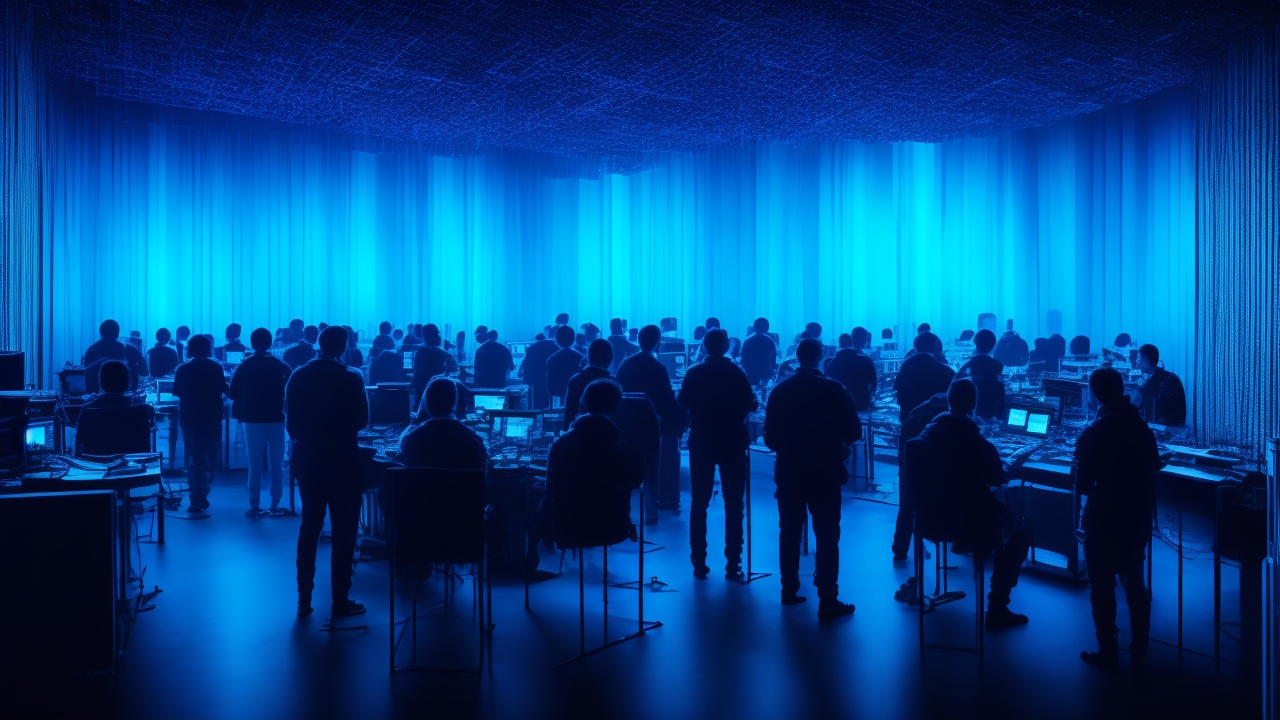
The ghost story of this moment doesn’t unfold in a candlelit attic or a fog-drenched graveyard. It hums to life in server rooms, in smartphone microphones, in the quiet blue glow of a laptop screen at 2 a.m. Picture a séance where the medium isn’t a person at all, but an algorithm listening harder than any human ear ever could.
Across the world, the hottest topic in supernatural and paranormal research right now can be summed up in four words: ghosts meet artificial intelligence.
From Dusty Recorders to Deep Learning
For decades, paranormal investigation looked a certain way: handheld camcorders, static-heavy audio recorders, and thermal cameras trundled through abandoned hospitals or family homes under the banner of research. You pressed ‘record’, asked your questions into the dark, and hoped that later, just maybe, a whisper would emerge from the hiss of the tape.
That era isn’t gone, but it has a very modern upgrade. In recent years, paranormal investigators have begun turning to AI-enhanced tools to analyze Electronic Voice Phenomena (EVP), still images, and video in a way the human brain simply cannot. An article from Innovative Minds AI describes how machine learning models are now being used to filter background noise from EVP sessions, isolate patterns, and flag anomalies that might otherwise be dismissed as static or environmental interference. These systems are not just amplifying; they are interpreting, searching for order within the chaos of sound and light.
In academic circles, technology’s growing role has been recognized as a turning point. A paper on the implications of technology in paranormal research notes that high-resolution sensors, thermal imaging, and data-logging tools have already transformed investigations by allowing for more precise measurements and repeatable experiments. When you add AI on top of that stack—automated pattern recognition, predictive modeling, and anomaly detection—you move from simply recording the unknown to trying to model it.
In this emerging space, the line between scientific inquiry and supernatural curiosity is blurrier than ever, and that very blur is what makes this trend so powerful—and so controversial.
The Numbers Behind the New Paranormal
Before we dive deeper into AI, it helps to understand just how widespread interest in the paranormal has become. This isn’t a niche hobby anymore; it’s a cultural undercurrent.
According to recent reporting summarized by Supernatural School, roughly 30% of American adults now engage with occult or esoteric practices such as astrology, tarot, or energy work at least once a year. That is not a fringe—it’s nearly one in three people, openly flirting with realms that once would have been politely hidden or dismissed.
And it’s not just an American story. A 2025 survey of Canadian attitudes toward the paranormal, conducted by researchers and reported through Phys.org, found that almost half of Canadians express belief in at least one paranormal phenomenon, ranging from ghosts and hauntings to psychic abilities. When nearly half of a country quietly admits that the world might contain more than meets the eye, it creates a fertile landscape for new tools and new approaches.
Those numbers matter, because they explain why the fusion of AI and the supernatural isn’t just a gimmick. There is a sizeable, curious, and increasingly tech-savvy community looking for better ways to explore the mystery at the heart of their experiences.
AI as the New Medium
So what does an AI-assisted ghost hunt actually look like?
Start with EVP—those faint, often garbled snippets of sound that some interpret as voices from beyond. Traditional EVP review requires endless hours of listening, replaying, and squinting at waveforms in audio software, all while trying to stay neutral and not ‘hear’ words that aren’t there.
AI changes the tempo. Using models similar to those that clean up call-center recordings or enhance low-quality podcasts, investigators can now feed their EVP sessions into systems that filter out background hums, cross-reference frequencies, and flag segments that deviate from the usual acoustic signature of a room. As Innovative Minds AI reports, these tools have been used to uncover clearer and more distinct responses in haunted locations, cutting down on false positives caused by environmental noise or radio interference.
Then there’s image and video analysis. Machine vision tools—close cousins of those used in medical imaging or security camera monitoring—can scan thousands of frames from a night of investigation. They look for anomalies in movement, light, or shape, and they can cross-check against known causes like camera shake, lens flare, or dust. Instead of an investigator pausing and replaying footage endlessly, the AI quietly combs through, surfacing moments that differ just enough from the baseline to warrant human attention.
In some experiments, AI even steps into a quasi-medium role. Investigators have begun pairing chat-based systems with live sensor data or recorded sessions. The idea is not that the AI itself is ‘haunted,’ but that it might recognize linguistic or pattern-based structures in alleged spirit responses faster than a person can. In this way, the algorithm becomes an interpreter, sitting at the edge of the known world, translating signals we don’t yet fully understand.
Predicting Hauntings: The Data-Driven Mystery
One of the most quietly radical uses of AI in paranormal research is not in reacting to phenomena but predicting where it might show up next.
Machine learning thrives on patterns. Give it enough historical data—locations, environmental conditions, witness reports, even geomagnetic readings—and it will attempt to draw lines between them. Some researchers, as highlighted in technology-focused paranormal coverage, are feeding AI models with years of case logs: dates, times, weather, moon phases, building histories, and outcome details about whether anything unusual was reported.
The goal is not certainty but probability. Instead of wandering into any old building with a camera and a flashlight, AI-generated maps might suggest that certain nights, locations, or environmental conditions have historically corresponded with more reports of activity. Are ghost stories simply clustering around older homes with specific wiring issues and drafts? Do spikes in paranormal reports overlap with spikes in the local geomagnetic field? AI doesn’t answer why—but it is very good at noticing that something tends to happen when certain dials are turned.
This predictive side of the mystery subtly shifts the culture of ghost hunting. It becomes less of an aimless vigil and more of a data-driven expedition. And in that shift, the language of labs—variables, baselines, anomalies—seeps deeper into the supernatural community.
Belief, Bias, and the Skeptic’s Question
Of course, there is a catch. AI can be eerily good at finding patterns—but it can also find patterns where none exist. Critics warn that machine learning models are only as good as the data they’re trained on. If you feed an AI thousands of clips labeled as ‘possible EVP,’ it might become excellent at surfacing similar audio—but that doesn’t mean the voices are truly paranormal. They might be fragments of radio, echoes of human speech in another room, or digital artifacts dressed up by our expectations.
Some skeptics point out that, in a way, AI might just be an automated version of what humans have always done with ghost stories: searching for meaning in the noise. Where an earlier generation strained to hear words in the hiss of a cassette tape, today’s investigator might lean in close to the colorful spectrogram on their screen, trusting that the algorithm wouldn’t flag it if it weren’t important.
Yet the technology also offers something skeptics have often asked for: transparency and repeatability. A human ear might be swayed by mood, by belief, by fear in the moment. An AI model, once configured, reacts the same way to the same input every time, and the process can be scrutinized step by step. It might not settle the debate over what is or isn’t supernatural, but it gives both believers and doubters a clearer framework for the conversation.
Practical Ways to Explore This New Frontier
You don’t need a research grant or a suitcase full of high-end gear to engage with this new wave of paranormal technology. If you feel drawn to the mystery, there are grounded and respectful ways to step into it.
- Start with your own baseline data. Before hunting anomalies, document the normal. Record a few minutes of audio or video in a room where you don’t expect any activity, then run that through whatever noise-reduction or analysis tools you have. Get a feel for what ‘ordinary’ looks and sounds like in your environment so that, later, you’re not mistaking every odd blip for the supernatural.
- Use technology as a tool, not an oracle. Whether you are experimenting with AI-assisted audio filters or simple data-logging apps, treat them as , not unquestionable authorities. Compare what the software flags with your own direct experience and common sense. If something strange appears on screen, ask first: could there be a natural explanation the model doesn’t understand?
- Document with care and share with discernment. If you capture something intriguing, keep detailed notes: time, conditions, who was present, what equipment you used. When you share your findings with a paranormal community—online or in person—invite both supportive and critical feedback. Encouraging rigorous discussion makes the whole field stronger and helps separate genuine anomalies from honest mistakes.
A Community at the Crossroads of Code and Spirit
Perhaps the most fascinating part of this trend isn’t the gadgets or even the alleged evidence but the way it is reshaping the culture around the supernatural. Where earlier generations might have split into camps—believers on one side, skeptics on the other—the rise of AI-assisted investigation is creating surprising alliances. Data scientists tinker with open-source tools to help ghost hunters clean up their audio. Historians collaborate with coders to feed old case files into searchable databases. Lifelong sensitives sit beside programmers, watching as their personal impressions intersect with color-coded graphs on a monitor.
This blending of worlds doesn’t dilute the mystery; it reframes it. Instead of demanding that every experience be either ‘proven’ or discarded, the conversation shifts to how we can approach the unknown with both wonder and discipline. Technology may never capture a conclusive image of a ghost, but it is already capturing something deeply human: our enduring urge to listen for what might be just beyond the edge of hearing.
If anything, the trend toward AI in paranormal research reminds us that the most powerful tools are still the oldest ones: curiosity, humility, and a willingness to ask better questions. The code running on our machines may sift data in ways we can barely comprehend, but it is our shared, very human desire to make meaning that turns lines of numbers into a story worth telling.
As you read this, somewhere a small group is huddled in the dark around a tablet, watching a live spectrogram flicker while the room sits still and silent. They are not just chasing proof; they are strengthening a sense of community around the great unanswerable questions. If you feel that same tug—if the borderlands between science and spirit, logic and longing, call to you—consider this your invitation.
Bring your questions, your skepticism, your experiences, and your open mind. The supernatural mystery of our age isn’t hiding in a forgotten castle; it’s unfolding in shared datasets, whispered stories, and late-night discussions. Pull up a chair with others who are listening, and add your own voice to the ongoing experiment of what it means to be human in a world that may be more alive, and more connected, than we can yet explain.